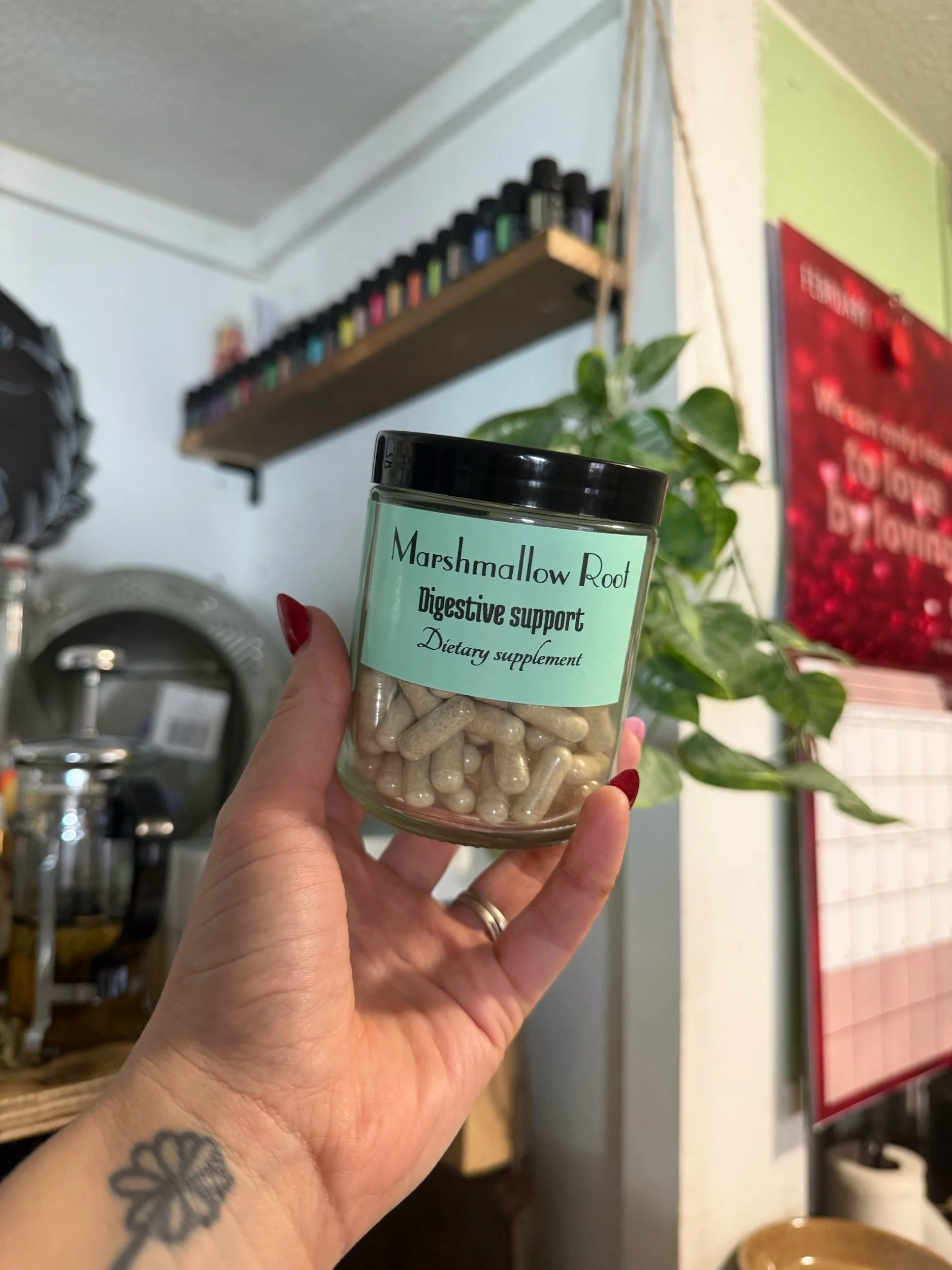
 Image 1 of 1
The "Internal Band-Aid" for Digestion
Marshmallow root is primarily used as a demulcent. This means it creates a protective film over mucous membranes. When you swallow a capsule, the powder reacts with your digestive fluids to create a soothing barrier along the esophagus, stomach lining, and intestines.
Key Digestive Benefits
• Acid Reflux & Heartburn: By coating the esophagus, it helps protect delicate tissue from stomach acid, providing a physical buffer that calms the "burn."
• Leaky Gut & Inflammation: It may help support the integrity of the gut lining by soothing "hot" or inflamed areas in the digestive tract.
• Irritation Relief: It is frequently used by those dealing with Gastritis, IBD, or IBS to reduce the discomfort caused by rough fiber or acidic foods.
• Gentle Laxative Effect: Because mucilage is a type of soluble fiber, it can help soften stools and move things along without the harsh cramping associated with stimulant laxatives.
How to Use Them Effectively
To get the most out of Marshmallow Root capsules, timing and hydration are everything:
• The Water Factor: Because the mucilage needs moisture to "bloom" and become slippery, you must take these capsules with a full 8 oz glass of water.
• The "Buffer" Rule: Since Marshmallow Root creates a physical film in your gut, it can potentially slow down the absorption of other medications. > Pro-Tip: Take Marshmallow Root at least 1–2 hours away from any other supplements or prescription meds.
• Best Timing: Usually taken 30 minutes before a meal to pre-coat the stomach, or before bed if you struggle with nighttime acid reflux.
Capsule vs. Tea
While many people drink Marshmallow Root as a "cold infusion" tea (soaking the root in cold water overnight to extract the most mucilage), capsules are a fantastic alternative for:
1. Lower GI Support: Capsules often break down further along the digestive tract, making them potentially more effective for intestinal issues than a tea that might be absorbed higher up.
2. Palatability: The root has a very earthy, bland, and slightly "thick" taste that not everyone enjoys drinking.
The "Internal Band-Aid" for Digestion
Marshmallow root is primarily used as a demulcent. This means it creates a protective film over mucous membranes. When you swallow a capsule, the powder reacts with your digestive fluids to create a soothing barrier along the esophagus, stomach lining, and intestines.
Key Digestive Benefits
• Acid Reflux & Heartburn: By coating the esophagus, it helps protect delicate tissue from stomach acid, providing a physical buffer that calms the "burn."
• Leaky Gut & Inflammation: It may help support the integrity of the gut lining by soothing "hot" or inflamed areas in the digestive tract.
• Irritation Relief: It is frequently used by those dealing with Gastritis, IBD, or IBS to reduce the discomfort caused by rough fiber or acidic foods.
• Gentle Laxative Effect: Because mucilage is a type of soluble fiber, it can help soften stools and move things along without the harsh cramping associated with stimulant laxatives.
How to Use Them Effectively
To get the most out of Marshmallow Root capsules, timing and hydration are everything:
• The Water Factor: Because the mucilage needs moisture to "bloom" and become slippery, you must take these capsules with a full 8 oz glass of water.
• The "Buffer" Rule: Since Marshmallow Root creates a physical film in your gut, it can potentially slow down the absorption of other medications. > Pro-Tip: Take Marshmallow Root at least 1–2 hours away from any other supplements or prescription meds.
• Best Timing: Usually taken 30 minutes before a meal to pre-coat the stomach, or before bed if you struggle with nighttime acid reflux.
Capsule vs. Tea
While many people drink Marshmallow Root as a "cold infusion" tea (soaking the root in cold water overnight to extract the most mucilage), capsules are a fantastic alternative for:
1. Lower GI Support: Capsules often break down further along the digestive tract, making them potentially more effective for intestinal issues than a tea that might be absorbed higher up.
2. Palatability: The root has a very earthy, bland, and slightly "thick" taste that not everyone enjoys drinking.